


For over a century, people have been going to cinemas to view the latest movie releases. Since movies are a facet of popular culture, they are now big business with the result that feature film production generally requires funding in the millions of dollars. Not surprisingly, any unresolved issues involving budgetary constraints and those responsible for them can have a detrimental effect on a major production.
Generally, there are three primary reasons for the non-completion of a feature film: the premature death of one of the lead actors; simple financial constraints; and finally the clash of professional egos, usually between the lead actor(s) and director. The vast amounts of money needed and the egos of those used to commanding huge salaries can sometimes be a lethal combination. At any stage, they can adversely affect a production even to the point of stopping it altogether.
The history of the movies – from the days of the silent film to the 21st century – is filled with productions that never made it to commercial release. Stars from the golden age of Hollywood right down to the present day have, for various reasons, left feature films unfinished including: Charlie Chaplin, Gloria Swanson, Marlene Dietrich, Errol Flynn, Bette Davis, Marilyn Monroe, to name a few. More contemporary stars like Johnny Depp, River Phoenix and Heath Ledger have also left films unfinished or only partially completed.
The fate of unfinished feature films falls into three broad categories: first there is the one that remains unfinished and is ether completely lost or its incomplete form survives somewhere; then there is the unfinished film which is later patched up with a tacked on ending and perhaps also an altered plot line; thirdly, there is the unfinished film, some of which, finds its way into another later composition, usually a documentary on that particular film.

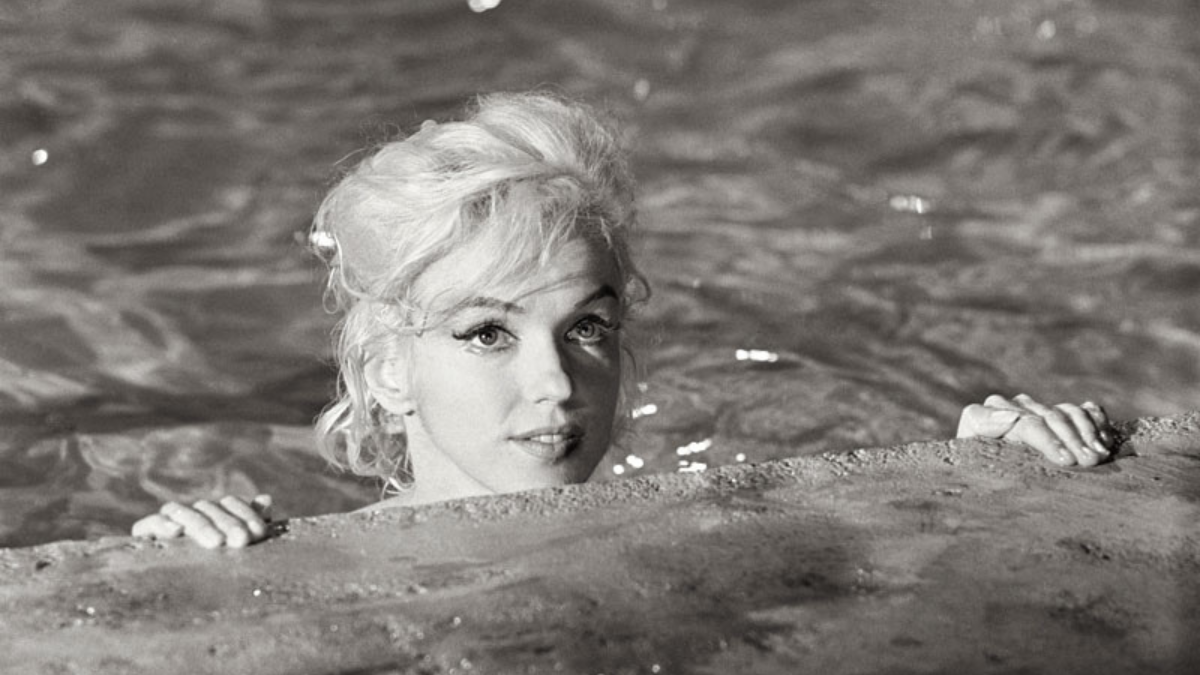
Marilyn Monroe in ‘Something’s Got to Give‘. (1962)
Of the all the factors, preventing the completion of a film, death of the lead actor would seem the most significant factor in halting a production permanently. For example, when screen goddess Marilyn Monroe died she was working on the movie ‘Something’s Got to Give’. Not enough of the script had been shot to complete the film so the few competed scenes were left forgotten for decades in some nondescript studio vault.
However, the death of a lead actor before the end of production does not always result in a failed movie. The crucial factor is how much of the script has actually been filmed. For example, the premature deaths of Heath Ledger and Brandon Lee while they were filming projects left enough footage for their respective movies to be completed and released commercially.
The script of Ledger’s final movie ‘The Imaginarium of Dr Parnassus’ (2009) had to be significantly modified to accommodate his sudden death after only about a third of the script had been filmed. As a result, he had to be ‘killed off’ a bit too early in the film which does affect the story line. Although we are left with a completed work, we feel his often conspicuous absence in the latter part of the movie.

Heath Ledger in ‘The Imaginarium of Dr Parnassus‘ (2009)
When the majority of the script, including key scenes of the lead actors, has been filmed, the continuity of the original story need not be compromised. When Brandon Lee died suddenly in 1993 all but a few scenes of ‘The Crow’ had been shot. It was finished with special effects to the extent that there does not seem to be any gap in story continuity.
Sometimes an incomplete film can be left for years before being re-edited into a relatively complete version as in the case of River Phoenix’ final movie ‘Dark Blood’. The incomplete footage was cobbled together years later into a semi-complete work using voiceovers by the director to compensate for the scenes Phoenix had not filmed. It was presented at a Dutch film festival 19 years after it was shelved due to his sudden death.
A star’s vanity can be equally damaging to a project. Screen diva Bette Davis walked off the set of what would have been her final film ‘Wicked Stepmother’(1989) after the first week of filming because she could not handle how she looked in the rushes. So little of the script had been filmed that the director had to cast another actress in the lead. Since she looked nothing like Bette Davis the story’s continuity suffered. The final patchy, incoherent result was released directly to video rather than theatres. (For fans, it must be a great regret that we never get see Bette Davis playing a ‘real’ witch in a feature length movie!).
Financial difficulties have ended films mid production going back to the days of silent movies. A classic example is Gloria Swanson’s would-be epic ‘Queen Kelly’ (1928). The excessive demands of director Erich von Stroheim created such cost overruns that the production was shut down. Also the timing of the production was inauspicious: the advent of talking pictures meant that the footage already shot was unlikely to be commercially viable. Another issue was potential censorship problems; it is doubtful that scenes depicting a brothel would have been permitted to mainstream audiences in the 1920s.

‘Queen Kelly‘ (1928)
A more notable example of an unfinished film is the first attempt to portray the Roman epic ‘I Claudius’ on the big screen. In 1937 Hollywood director Joseph von Sternberg began production in London with an all star cast including Charles Laughton as the lead. About half-way through filming, the production was shut down and never resumed. Various reasons for this have been put forward such as the clash between director and lead actor and the dubious story that one of the other leads had been involved in a minor car accident. Less publicised was the fact that the director was temporarily admitted to a psychiatric ward of a major hospital following an emotional melt down apparently brought on by the entire ordeal.
Fortunately not all of these unfinished films have been completely lost. Occasionally some of the remaining footage finds its way into other films. Sometimes a failed film project is resurrected into a documentary either for cinemas or television. For example, footage from Terry Gilliam’s unfinished ‘The Man who Killed Don Quixote’ (1999) appears in the documentary ‘Lost in La Mancha’ (2002). Another Johnny Depp feature ‘Divine Rapture’ (1995) where he would have co-starred with Marlon Brando was never completed. A documentary about this failed project entitled ‘Ballybrando’ (2009) includes some of the original footage.
Similarly, the edited scenes of ‘I Claudius’ were gathered together in a BBC TV documentary ‘The Epic that Never Was’(1965), twenty eight years after it was shelved. What remains of the existing footage reveals it might have become a screen classic. Fans of this historical novel would have to wait until the 1970s when it would be adapted as a BBC television series starring Derek Jacobi.

‘I Claudius’ (1937)
The footage from Marilyn Monroe’s last incomplete movie was presented in a television documentary in 1989 and the few completed scenes are available on the internet. An interesting aside to this unfinished film is that it would have showed Marilyn as something of a screen pioneer pushing the boundaries of offical censorship at the time. In a swimming pool sequence, she filmed an impromptu semi-nude scene. Had the film been released, she would have been the first actress (at least in the era of sound films) to appear in a daring semi-nude scene in a mainstream movie.
Even the ill-fated silent film ‘Queen Kelly’ was eventually resurrected more than half a century after it was abandoned. Using still photos, inter titles and the few actual scenes actually completed the more controversial parts of the story were patched together and shown on television.
These resurrected projects offer a glimpse of the unrealised potential, of what might have been and thus are, especially for movie buffs, unfortunate missed opportunities. Their potential remains unrealised and the topic of endless speculation.