


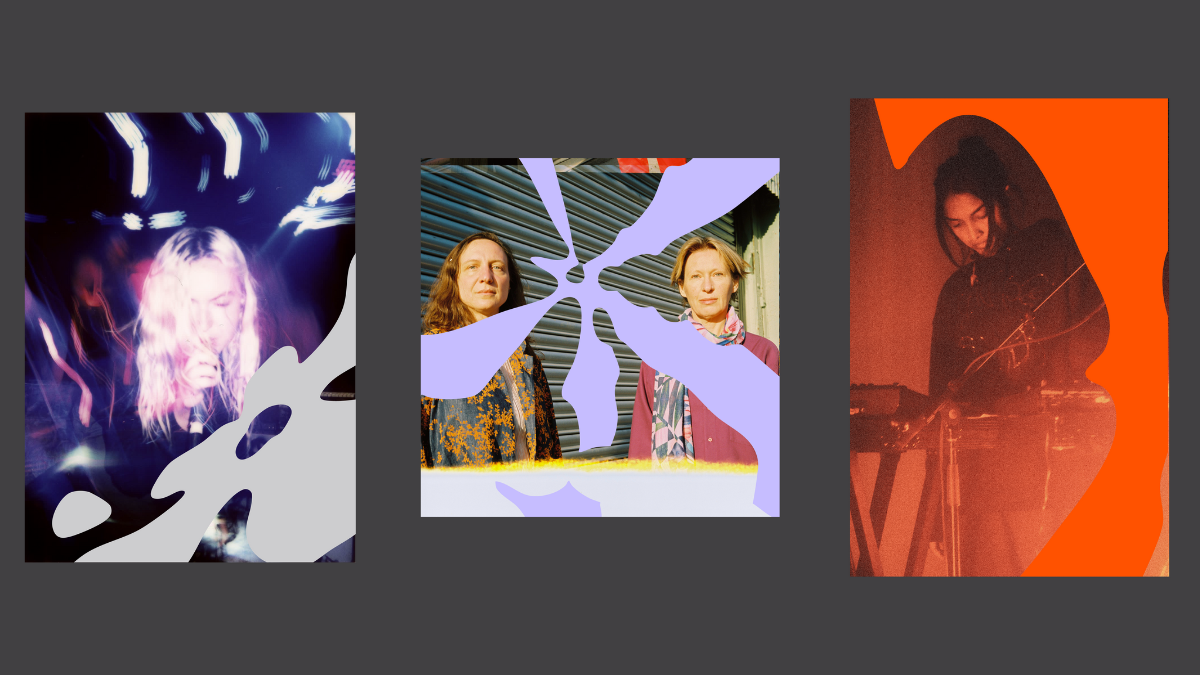
A couple days ago I sat down with two co-curators of the exploratory music festival Audible Edge – arguably The Event that epitomises the local experimental scene – to talk about how it comes together, and how their personal perspectives, taste, and politics shape it into the beast it becomes.
You talked to Magazine 6000 last year about Audible Edge, so instead of asking what Audible Edge is, how does this year differ from its previous iterations?
Annika: I think this year shows a real blossoming of a lot of partnerships, especially considering the support from the City of Fremantle and Melville. In terms of the layout of the festival, it’s somewhat the same – the Night School precedes the festival, and then four jam-packed days – but there’s always something new in the program.
Josten: I think musically it’s a bit… darker? We can’t help but be a bit silly, but in general the music is more on the challenging/unusual end. That doesn’t mean that there’s not a lot of beautiful stuff in there, but even the beautiful stuff is about getting your hands dirty. Silvia Tarozzi and Deborah Walker are performing Italian women’s songs from wartime, as an example of something that’s beautiful but eerie.
Annika: As we wrote: “If 2024’s festival was something that shimmered and shined, AE’25 is the same but dropped in the mud.” So it’s still shimmery and sparkly… we were thinking of your (Josten’s) story of the termites?
Josten: You know the electro-acoustic composer Francisco López? He works with field recordings – and he has a background in entomology. We were in North-East South Africa, and we were watching this termite bloom – it’s this moment where billions of winged mating termites come out of their mounds and fly into the sky, and when they meet one another, they drop their wings and go make a nest. We were all watching it with this fascination – it looked beautiful with all these wings on the ground, forming an iridescent carpet, and Francisco – wearing a singlet and shorts – walks right into the middle of it, turns around, and goes “c’mon guys, this is a once-in-a-lifetime opportunity!”
Annika: It’s a good metaphor for the experience of AE – bravely walking into something, turning around, and saying “you have to try this, come in here as well”. You have to get into the mud together – you can’t just stand outside of the mud and look at it and be like “I understand what’s going on”, you just can’t! Not until you’re in the mud with everyone else.

Audible Edge, April 3-6.
You two travel and work outside of Boorloo a fair bit (Josten recently did a East Asian tour, and Annika facilitated community art projects up North) – has your experiences outside of Boorloo affected your view of the city in relation to curating a local festival?
Josten: One of the catalysts for AE was the 2015 Cable Festival in Nantes, France. Every show was in a different venue – a black metal show in a basement with 500 people one night, and a soft double bass show in a glasses shop at an optician’s to an audience of 20 the next morning. A lot of people came from neighbouring cities as visitors, and through the festival you got to traverse all the geography of Nantes. Seeing that planted the seed for AE.
I remember going to Europe (particularly Berlin) as a young person and witnessing these high-level-international-but-grassroots festivals of experimental music and feeling really invigorated, but now I go overseas and I miss this place! I guess travel has helped me see how good things can be, but it has also helped me work out what it is that we can do here, and how we can amplify what is special about this place.
Annika: And it’s not just seeing something overseas and trying to recreate it here – it’s seeing what already exists here and trying to make something right for this very particular place that we’re in. The programming possibilities with these amazing outdoor venues alone – how can you watch the sun setting over the Derbarl Yerrigan in Berlin? You can’t!
In a different way, the time I’ve spent up North has less affected the program, but more the culture behind the festival – especially in terms of really being in the place that you’re in and being devoted to the relationships that you’re constantly working with. It’s something we take really seriously as curators – being good people to work with, listening to artists, and putting those person-to-person relationships first.
Josten: One of the things that is really important about this festival is that it makes Boorloo a node in this global network – people apply for funding from their governments to come down here, and through that we can participate in this network and get (inter)national artists to come here and perform. This year’s festival has a lot of local-visitor collaborations, so we have to think about how we can facilitate people here (who are really far away from everything) to work with their friends in Korea, Sydney, or in my case, Mexico and Germany.

Aarti Jadu
A number of the crew (including Josten and Annika) are improvisers, is there much utilisation of improvisation within the organisation process?
Annika: I feel the curation process between Josten and I is fully vibes based – we just sit down and throw ideas at each other like WOP! WOAH! and then we have to figure out what we’re doing with it and how to make it work. The dreaming up of the festival is a very loose process, we enter these flow states together. But then once we get down to organising, it has to be quite intentional.
Josten: Although I think there’s ways we break it – I do think about emails and playing the game of getting information out clearly whilst also conveying a lack of reverence towards the medium. I think there are little ways where you can embody the clarity of communication, transparency, and accessibility, but also that punk “I don’t give a f*** about this” ethos. Maybe they’re irreconcilable, but there’s something there that we’re trying to do with the whole festival.
You mentioned “dreaming up the festival”, and via the Tone List Narrowcast you mentioned that one of the Night School programs literally came to you in a dream, could you speak to the creation and curation of Night School?
Josten: The overall thrust of it is similar to last year – we recognise that there’s a lot of censorship, disempowerment, and not much funding, so in that context, how do we recognise the power of the spaces that we’re making when we do things like AE? And when we make these spaces, we prove that we can do things that don’t exist for profit or the interests of nefarious things – we can simply do things and they can be really meaningful and powerful, and they can give people that sense that they’re part of something important.
Annika: Everything talked about in Night School is present in the festival proper, but it’s providing a very different context. When you go to a show, you sort of have that opportunity to stop and chat about what’s happening, but when you enter a “workshop” space, you come with that mindset of engaging and listening in a much smaller group. Night School gets to convey the political and ethical underpinnings of the festival in a much more direct way, and being critically engaged as an artist is as important as going to the show.
Josten: We were also playing with a lot of complementary and contradicting ideas. For example, Annika’s idea (Bank Night) was that we want to hold multiple perspectives about money at the same time. One thing AE likes to do is to not play into the two echelons of the “funding people who make boring work but get paid for it” and the “non-funding people who make interesting art and are losing money off of it” that’s prevalent in Australian art spaces – instead I think there is a Third Way, where you can remain attached to this DIY space but also understand your rights as a worker.
Annika: Bank Night is a set of two presentations, the first is from representatives from the DLGSC, saying “this is how you write a good grant so we can give you money!”, and then the second presentation is by independent artist Bridget Chappell, titled Defund the Arts, which translates their zine F*** You Don’t Pay Me into a workshop context. It’s about giving the space for both things to exist in the same two hour bracket, but not picking an allegiance to either side – more inviting people into the space to think about it, and encouraging a sense of agency and autonomy.
Josten: I would also like to acknowledge that this Night School session, as well as two others, was a partnership with STRUT Dance and the Blue Room, so it wasn’t just our curation, but a bigger roundtable, bringing together different disciplines.

Silvia Tarozzi & Deborah Walker
What are you most personally excited for in the program?
Josten: Ross Bolleter at Teeter Bakery; folx who aren’t under 30 may know Ross because he was more actively performing decades ago, but he is truly a legend of the local scene, and it’s very rare to see him nowadays – it’s his first public solo show for about 10 years – so I definitely want to flag that one.
And it’s sort of a conflict of interest because I’m playing at the same show, but this group a.hop is an international supergroup made up of nine artists from across five continents. Our own E Millar is a part of this group, and Korean artist lo wie will come over and create a local manifestation of this quite unusual and special nine-piece ensemble.
Annika: AE Club has been this evasive shadow-in-the-fog that we’ve been trying to summon for a long time. Lia T has been a co-curator for this show and personally, there’s some artists that I really really love on that lineup. This idea of “The Club” is this utopian place that never quite is real – so I’m always thinking of how we can make the club-space a fun, invitational, comfortable place for our bodies to show up fully.
I feel like another thing that is really special to us is that it’s the first time we have a smoking ceremony for the festival. That’s with Ingrid Cumming – there’ll be a bit of music (a DJ/jazz weirdos duo debut from Cash Promise and Naarm-based Flora Carbo), but I think it will be a good moment especially if you’re planning on coming to the whole festival – it’s a moment of grounding ourselves together in Boorloo. We’ll be there, and lots of the artists will be there if you want to have a yarn.

Vanessa Worm
Lastly, are there any goals you two have beyond this year’s Audible Edge? Any thoughts on next year’s iteration?
Josten: The honest answer is that it’s hard for me to think about – we live in this precarious cycle of insecure funding, and it’s more feasible to imagine that there won’t be another Audible Edge ever again, though somehow they keep happening!
Annika: Maybe this is more to Tone List than its flagship AE, but we have been undergoing this growth in terms of its board and its organisational structure – figuring out how to stabilise financially, how do we make this a sustainable process for all of us – that Third Way – how do we demand the resources that these people need, and for ourselves?
Josten: My more optimistic answer would be that Tone List turns 10 next year, so it’s a big year, and I wonder if the festival may change shape in response to that – I don’t know how that would look just yet, but we’re considering if we can troll through our decade-long backlog of recordings, putting out some compilation records – or maybe something that memorialises the community’s commitment to this thing for so long – and because we share a birthday of Outcome Unknown– I’m just thinking of this now, my improvisatory curation process!
Annika: And creating a moment of reflection of the huge amount of change that has happened in a decade – in terms of the rigour and strength of the Boorloo music scene, and I think there’s so much more happening than there was before, it’s actually quite crazy – it’s not just us though, it’s a lot of people in this community.
Audible Edge runs from April 3-6, and you can view the program here.