


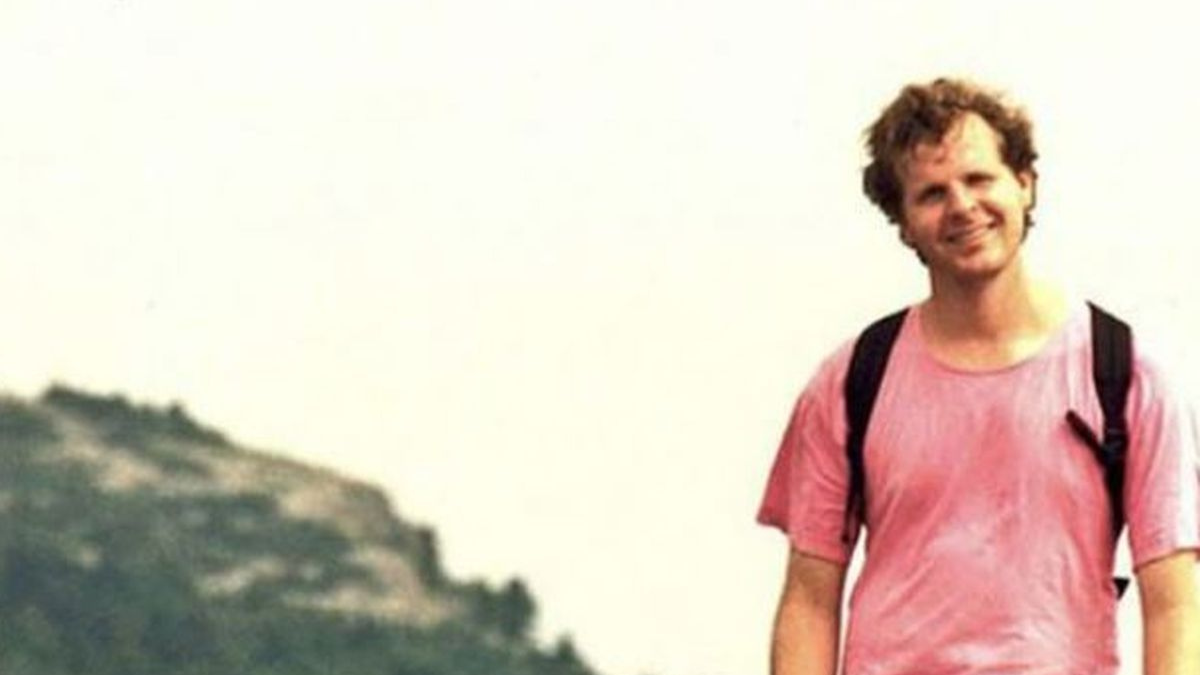
A young man dies in suspicious circumstances, his elder brother on the other side of the world launches a quest to discover the truth. In the process, he and his colleagues uncover a sinister web of similar crimes rarely investigated and sometimes not even acknowledged by the authorities.
This tale begins in December 1988 when the naked body of 27 year old Scott Johnson is found at the base of a cliff in near the entrance to Sydney harbour. Officially, it is ruled a suicide by the local police and filed away in some bottom drawer. This inaction triggers a quest to get at the truth that would last over 30 years. Unfortunately, this is not the scenario of a fictional murder mystery nor the plot of a feature film but a non-fiction account of a premature death which exposed decades of evasion, deception and corruption.
From the beginning, this story unfolds on two levels: the personal and the political. The former concerns the individual lives of the author and his brother while the latter examines the broader societal context in which this crime occurred. These two levels result in a blend of biography/autobiography and criminal exposé. But this book is much more than a true life whodunnit as it shines a light on a series of hate crimes at a particular time and place in our history.

‘A Thousand Miles from Care: The Hunt for My Brother’s Killer – A Thirty-Year Quest for Justice’ by Steve Johnson, HarperCollins, London, 2024.
On the biographical level, we learn how remarkable these two brothers were. Growing up in poverty in the US with distant even, at times, neglectful parents, they face many challenges even as young children. Despite these origins, the two brothers would excel both academically and financially – with Steve becoming a multi-millionaire through his innovative I.T skills.
On the political level, Steve Johnson’s quest to get at the truth goes beyond finding his brother’s killer. Through his investigations over the decades and with the assistance of various legal and media people, he documents a sinister web of cover-ups to other suspicious deaths and unexplained disappearances, all of them gay men like his brother. Many of these in the same area where his brother was killed. At the time and even years later these gay hate-crimes were not taken seriously or even acknowledged as such by the authorities.
This book highlights the corruption and ineptitude of the NSW police force in dealing with these crimes over three decades ago. It harks back to a period when gay men had few rights and practically no protection from vicious gangs who staked out secluded areas frequented by this marginalised group. Fortunately, progress has been made since the 1980s and this author played a significant part in this positive change.
His efforts uncovered a sordid episode in the policing of gay-hate crimes. The media attention it raised shed light on various other mysterious deaths and disappearances of gay men from the mid 1980s to the late 1990s. The book reveals a disturbing web of violence, corruption, graft and an almost unbelievable denial of the truth by the authorities. We learn that those in authority who oversaw and even participated in this negligence escaped the rigours of the law. Their fate tended to be taking early retirement or being ‘eased out’ of their positions. Worse still, many of these murders still remain unsolved. As a result, the killers of many other victims are still roaming free.
Apart from the crimes themselves, there is a further uncomfortable aspect to this unfortunate story. Steve Johnson had the legal and media connections to pursue his search for truth. Had Steve not had the major financial resources to pursue this case, the killer of his brother would never have been brought to justice.

Scott Johnson.
This account of how his brother’s killer is eventually brought to justice and the decades it took is so convoluted with so many challenges that not only are we gripped and even frustrated by the suspense, we are overwhelmed by his persistence and tenacity. Parallel to this is the devotion of his family, friends and colleagues who include former police, journalists, legal practitioners, academics and media personalities – all are exemplary in getting at the truth.
This book is written with such clarity and directness, we easily emphasise with the author. We can’t help but be amazed by his dogged determination and loyalty in this testament to a talented and beloved younger brother. Not only did he have to sit through three inquests into his brother’s untimely death, he had to liaise with countless individuals and agencies across two continents and made many trips to and from the US to Australia.. ‘Justice delayed is justice denied’ as the old adage goes and in this sorry case it was denied for over 30 years!
The book has many twits and turns of a whodunit page turner. As he and his colleagues inch closer to the truth, there is set-back after set-back and we feel Steve’s emotional pain, anger and frustration at not only the police but also the legal justice system. Ultimately his persistence pays off.
Whenever a young person dies prematurely it is a sad occurrence; when it is the result of criminal violence it is a tragedy. In this instance, the tragedy is compounded: Scott Johnson was a gifted mathematician about to complete a PhD in this field. It is clear that he was likely achieve success that would emulate his brother’s. Therefore, his life had great potential which will never be realised. His untimely death was a loss that goes beyond his friends and immediate family. This alone justifies his brother’s persistence and determination to seek justice and get at the truth behind this and, by implication, similar hate-crimes.
The book is a fitting tribute to a beloved brother and an exceptional individual.