


3RD Place Productions brings the latest evolution of their show ASK to the Blue Room Theatre in a play filled with fabulous elements of First Nations culture—like cheeky humour that breaks the tension at just the right moment and rich movement that mimics nature.
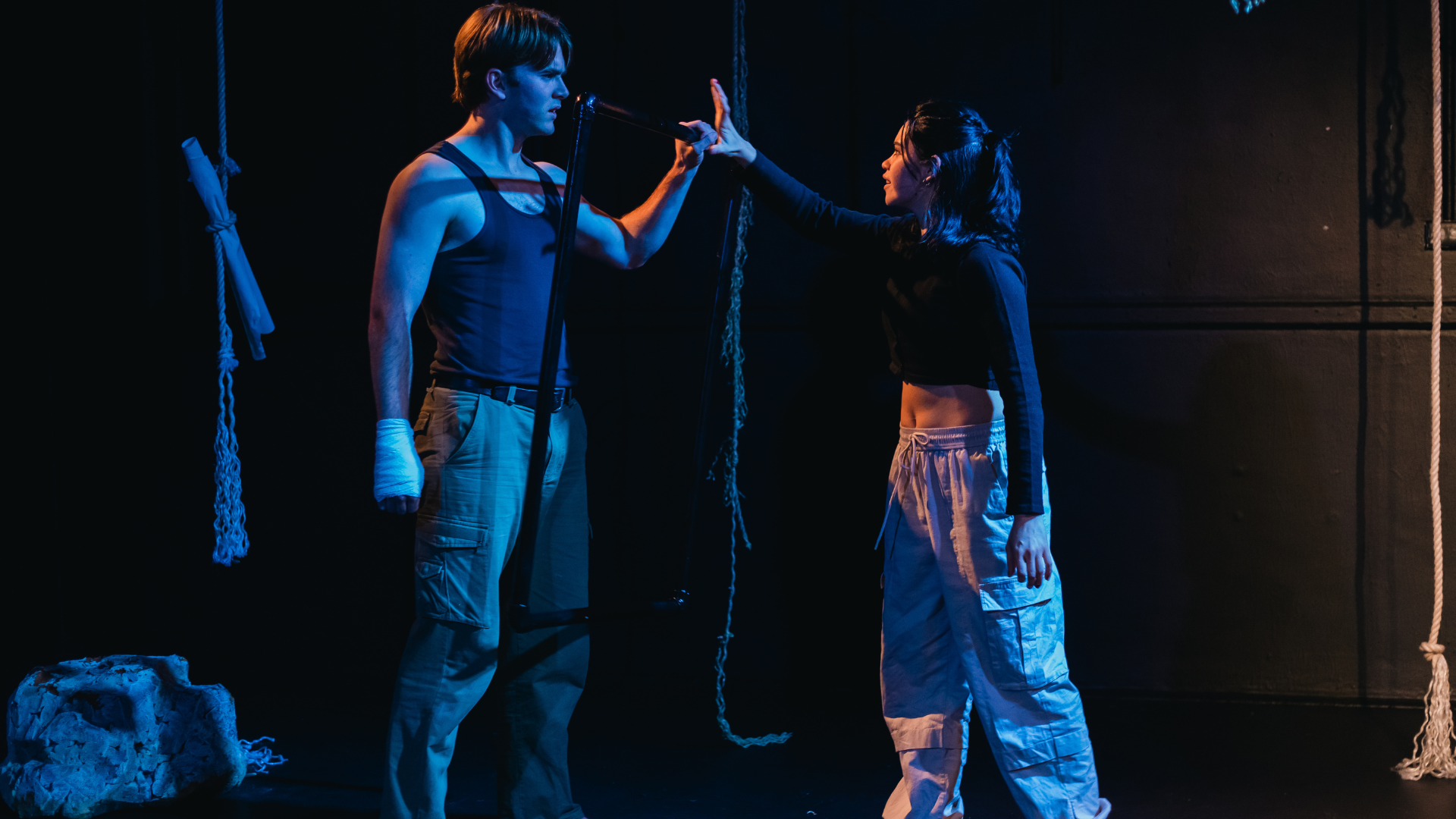
Director and writer Barbara Hostalek draws heavily on symbolism throughout ASK, such as using a picture frame to focus on the characters in line with the dialogue or as a portal they step through to reach another place somewhat reminiscent of the Upside Down from the Netflix series Stranger Things. When the characters enter this portal, the ropes suspended from the ceiling evoke the sensation of being beneath a tree, just beyond its roots, in the physical and metaphysical depths of Country. This presentation expertly conceptualises the spiritual connection that First Nations people have with the land and sky. The magical realism of the portal was enhanced by fun, immersive sci-fi visuals that gave a video game vibe while still complementing the elaborate themes it represented.

ASK. Photography by Andrea Mae.
From the moment Jai Craig-Fraser’s body was sprawled on the floor with white body paint flowing along his arms, I was immediately captivated by his performance. At first, the paint resembled veins, evoking thoughts of the spiritual intertwinement of people and Country as we cycle from the human form into the earth and beyond with the passage of time. As he emerged from the stage floor, he brought to life a delightfully cheeky characterisation, which I realised was a tree when he turned his back to the audience to reveal the white paint along his spine resembling a tree trunk. Reflecting on it now, the tree trunk ending at his waist further exemplifies the symbolism of the Upside Down portal, as his pants mirrored the colour and texture of the rope branches.
As the Tree Spirit danced across the stage while family dramas unfolded, it brought a subtle breeze to the tension between the human characters. The sibling dynamics of Leah Pigram as Felicia and Oliver Hughes as Mickey were delivered with unmistakable authenticity, relying on nuanced performances rather than loud noises or forceful movements to communicate their frustrations. Mickey’s struggles with addiction illness and other challenges cause a rift in their relationship when he pawns a painting created by their grandmother. Felicia’s sorrow at the loss of this one-of-a-kind artwork feels like a metaphor for colonial history’s feeble attempts to erase First Nations culture. Pigram’s portrayal of Felicia captured a sassy character who broke the intergenerational trauma cycle and helped all the characters heal.

ASK. Photography by Andrea Mae.
Despite my obsession with the Tree Spirit, the trio of actors formed a stunning ensemble. This cohesion extended beyond the performers to the intricacy and interplay of the costume, set, and lighting design—a flawless and seemingly effortless collaboration unlike anything I’ve witnessed on stage.
There are elements of this show that reminded me of another great First Nations production I saw this year, Mutiara at the Perth Festival. Janine Oxenham’s choreography and Barbara Hostalek’s direction shared some of the qualities I admired in Marrugeku’s work, with a beautiful flow that gently swept the air from every corner of the stage, creating a lovely current in the room. Between ASK and other productions, this year has been a celebration of First Nations excellence, leaving me wanting more.
ASK is on at The Blue Room Theatre from 12-23 November.