


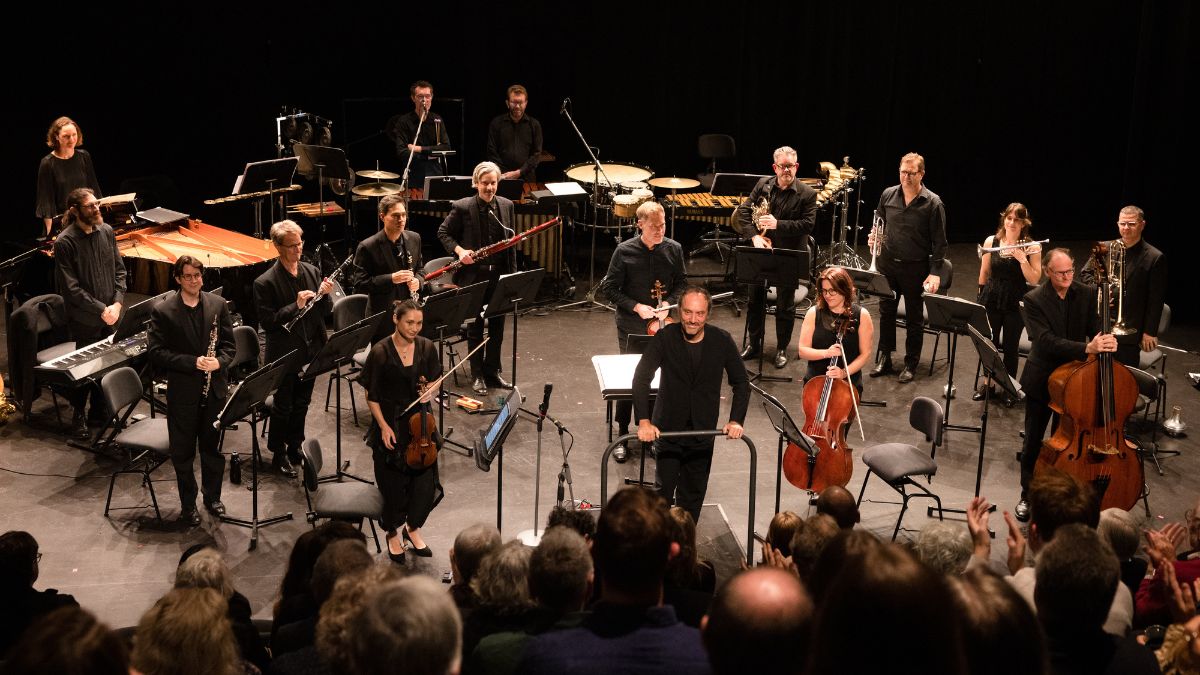
Performed in the Studio Underground at the State Theatre Centre, the WA Symphony Orchestra’s Danceworks was a thrilling dive into the world of post-minimalist music, with a strong Dutch flavour.
Conducted by Otto Tausk, the program paid tribute to the legacy of Louis Andriessen and his influence on a generation of composers who pushed the boundaries of rhythm, repetition, and musical form.
What became immediately obvious from the first note of Michael Torke’s Adjustable Wrench was that the Studio Underground space crossed a new boundary for WASO regulars. While Perth Concert Hall and Winthrop Hall delivers a wall of sound with almost indistinguishable unity of instruments, the new stage and smaller ensembles allows us to identify and appreciate each individual sound and their importance. This was exemplified in the later Padding and Martland pieces.
Adjustable Wrench was a punchy, upbeat piece that set the tone with its bright, syncopated rhythms and jazzy undertones. It felt like a musical engine revving up—playful, mechanical, and full of energy – and a truly enjoyable departure from what we expect of “classical” music.

WASO’s Danceworks. Photography by Daniel James Grant.
Next came Andriessen’s own Dances, a four-movement work that was the intellectual heart of the program. The music was both subtle and confrontational, with pulsing rhythms and unexpected turns. Andriessen’s influence was clear in the rebellious spirit of the piece challenging what orchestras are capable of.
After the interval, Martijn Padding’s Slow March to Moscow offered a brief but quirky interlude. Its off-kilter rhythms and ironic tone brought a touch of humour. This was the only classical piece of music I thought I could play a part in one day – that of the paper player. I’m free anytime, WASO.
The concert closed with Steve Martland’s Dance Works, a four-part suite that was hypnotic, physical, and relentless. The music pulsed with a rock-like intensity, yet remained tightly structured. It was a fitting finale—bold, loud, off-rhythm and unapologetically modern.
Throughout the night, the orchestra played with an impossible precision in the unconventional repertoire. Tausk’s connection to the Dutch composers gave the performance a personal touch, and his enthusiasm was infectious.
Danceworks wasn’t your typical symphonic evening—it was a celebration of rhythm, rebellion, and the joy of movement. For those willing to step outside the classical comfort zone, it was a deeply rewarding experience.