


As the title suggests, this is a study of the queer contribution to popular music from the birth of Gay Liberation to the beginning of the 21st century.
Whether as performers, promoters, composers, queer individuals have long been a staple of popular music. However, it is only comparatively recently that their visibility let alone their contributions to popular music have been acknowledged. Equally these artists have long had a collective but often invisible fan base.
This book is composed of short chapters devoted to a particular singer or music group. The range is as diverse as 1960s Motown to disco, glam rock, punk and new wave of later decades. The variety of music genres and performers discussed is impressive. Admittedly, there might be a rare few who are unknown to even avid music fans but the vast majority have international status.
‘Mighty Real’ is the result of the author’s decades of experience as a music journalist. Consequently, he has previously reviewed many of the songs and performances he discusses and interviewed some of the artists covered. Since it is written by an expert in the music field, it contains a few technical terms which might elude some of us non-musos. But these are relatively few and so do not detract from appreciation of the topic.
Sprinkled throughout this collection are autobiographical snippets, specifically how the music and singers he describes helped him to come to terms with his own homosexuality.

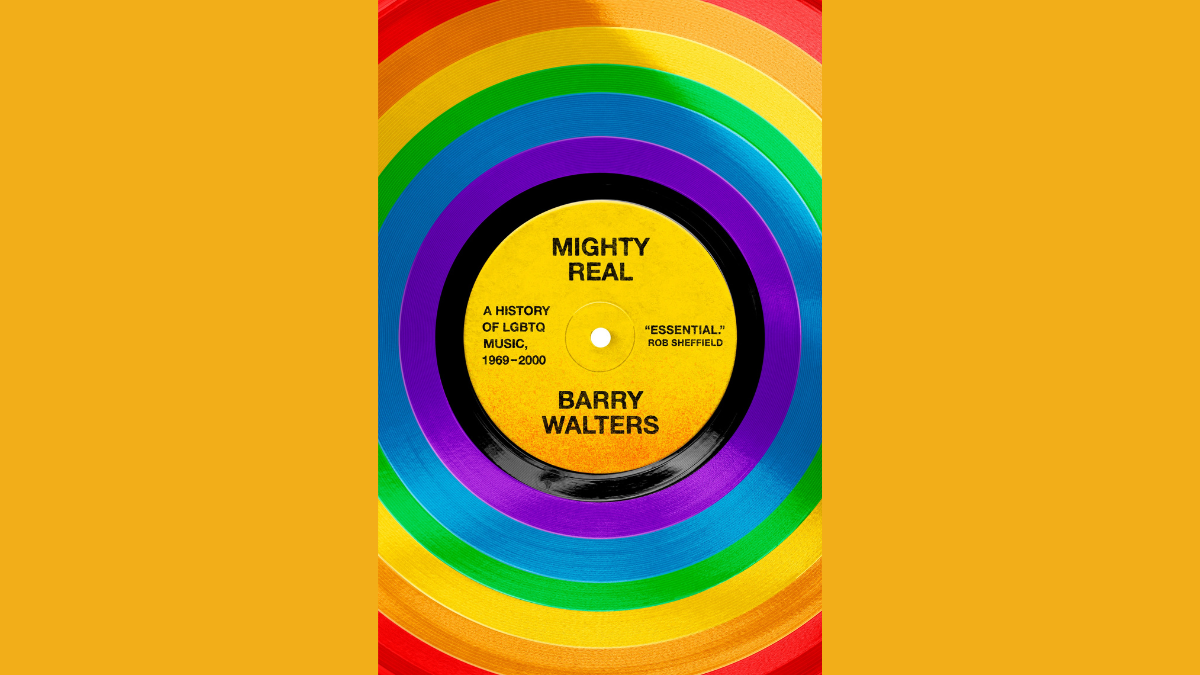
‘Mighty Real A History of LGBTQ Music 1969 – 2000’ by Barry Walters, Viking, New York, 2026.
Before the more flamboyant groups and overt lyrics of recent decades, there were more subtle ways in which the musicians could get sexually ambiguous messages across. For example, lyrics might not reveal the gender of the object in a love song by leaving out the pronouns he, she, him, her.
Although it contains trivia and some gossip, it is not a frivolous work of exclusively queer artists: it makes significant sociological points about the evolution of popular music throughout this specific period. Equally, its is not a dry academic study of the topic.
An important point is how the queer experience with popular music parallels that of other marginalised groups in the same industry, specifically African-Americans and female singers and musicians. (We are reminded it was not all that long ago that a female singer or group had to fight to promote their own distinctive songs and music styles.)
He explores this co-operative relationship among these marginalised groups in the context of the respective styles of each artist, group and trend in popular music. As marginalised groups, they could easily identify with and mutually support each other through the bonds of mutual exclusion and discrimination.
Naturally all the more flamboyantly camp performers are included (Boy George, the Village People Frankie Goes to Hollywood, the Pet Shop Boys, Queen Latifah, RuPaul.) This collection also includes groups and individuals who questioned traditional gender roles (Queen, Morrissey, Sinead O’Connor, Madonna, Cher, Annie Lennox) as well as those performers with a significant LGBTQ following (ABBA, Dolly Parton, Blondie).
‘Mighty Real’ is a comprehensive history and sociological study of popular music. Although there is no index and no illustrations, there is an extensive discography and detailed notes on references.
It includes both those who transgressed the boundaries of contemporary music with their lyrics and performance, those who were openly LGBTQ and those who weren’t.
‘Mighty Real’ is a personal summary of a specific contribution to popular music rarely acknowledged until the last few decades: history made interesting.