


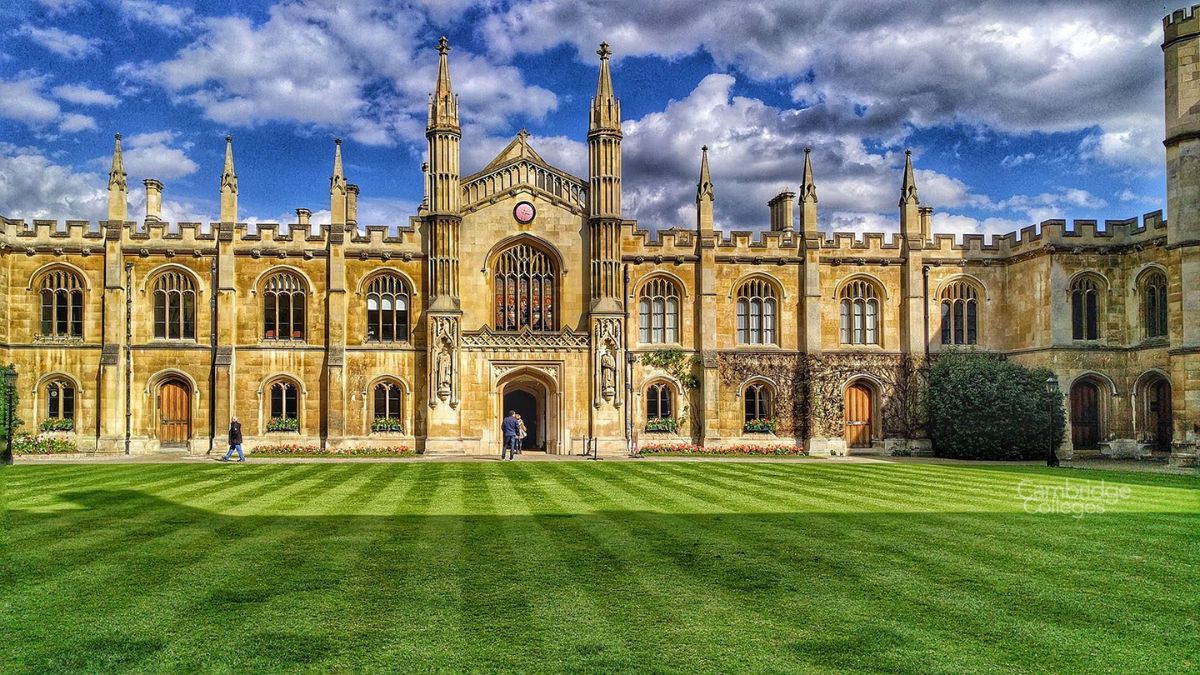
In the distant past, there were very few areas where gay men could pursue careers and relationships in a largely supportive environment. Fortunately, for a select few, there was a safe haven: the realm of elite academia. Ironically, this haven was at the heart of the predominantly conservative British establishment. As the title suggests, Queer Cambridge: An Alternate History, this book examines one particular university campus: Cambridge and one particular college on that campus – Kings College.
This work explores the hollowed halls of this university campus where in the distant past students and their tutors had rooms and could pursue their education as well as their (for the period) unconventional friendships and relationships.
Some of these Cambridge graduates became world famous for their contributions to the arts and other fields. They included individuals such as the author E. M. Forster, economist John Maynard Keynes and cryptographer Alan Turing as well as others who were less famous but also contributed to contemporary culture.
Despite the oppressive legal and moral restrictions of the time, their access to eduction, particularly that of an elite university brought various benefits. As young men thrown together in a university which then excluded woman, they were free to associate and form friendships with the gay men in their vicinity. (Due to their monastic origins, universities were originally exclusively male affairs. This particular Cambridge college did not admit women as undergraduates until 1972).

Queer Cambridge: An Alternate History by Simon Goldhill.
While there were always working class youths who won scholarships and made careers after Cambridge, the majority of men who entered these hallowed halls of higher eduction came from more secure middle-class backgrounds. Thus universities of more than a century ago represented an oasis of male privilege and, particularly, middle class male privilege.
As a serious academic work, this book is well researched with many illustrations and extensively referenced. Although written by a university professor, one does not have to be a university graduate to appreciate the many relevant points he makes. He blends these facts into a coherent history of one aspect of queer culture – an aspect rarely researched to such an extent. It goes beyond the encounters within the private rooms and dining halls of King’s College to the broader context of contemporary society. It explores its theme on two levels: the personal/biographical and the broader sociological context. Specifically, how homosexuality was viewed in British society from the late nineteenth century onwards.
He examines a range of issues including the changing definitions of alternate sexuality and stereotypes that persist to this day. Quoting articles from the distant past, he reveals the veiled references to homosexuality in the ‘unmasculine’ aspects of the suspect ‘arty’, ‘Bohemian’ crowd.
According to this view, men involved in theatricals and music are ‘lesser’ males than those who pursue more ‘masculine’ pursuits such as athletics. Quoting a magazine article from the late nineteenth century, we are informed: ‘All musicians are as a class wanting in the manlier qualities.… devotion to athletics forms cardinal a tenet in the national creed,..’ Whereas devotion to music, for example: ’weakens moral and physical fibre…’(P. 188). Nevertheless, these ‘arty,’ ‘Bohemian’ types thrived in King’s College for many decades.
This book reveals a rather unconventional aspect of a famous institution; we get extended accounts of the goings-on in the these hallowed halls of learning and the many colourful characters who lived and worked there. However, it is not just a collection of anecdotes and mini biographies of unorthodox individuals. They form part of an analysis within a broader sociological context. The personal, individual stories are considered within a broader social context of the changing legal and moral sanctions of the time and also within a contemporary context of the twenty-first century.