


With any film franchise that has been around for decades, each new instalment has to offer something a little different to spice up all the predictable elements. Ever since the first Jurassic Park movie in 1993, there have been been a host of sequels, all of them with similar scenarios: dinosaurs get loose, wreak death and destruction and eventually are subdued by luck and human ingenuity.
This latest sequel touches on some contemporary issues and diverges slightly from previous films, both in terms of cast and a few minor plot variations. To begin with, there are none of the actors from previous movies. Furthermore, the prehistoric creatures are no longer in theme parks or laboratories near inhabited areas. In fact, there are very few spots where they roam around. It seems they might be on their way out due to unfavourable climate factors. (A clear nod to climate change). There are only a few places left where they survive, one of which is an isolated island somewhere south of the Caribbean.
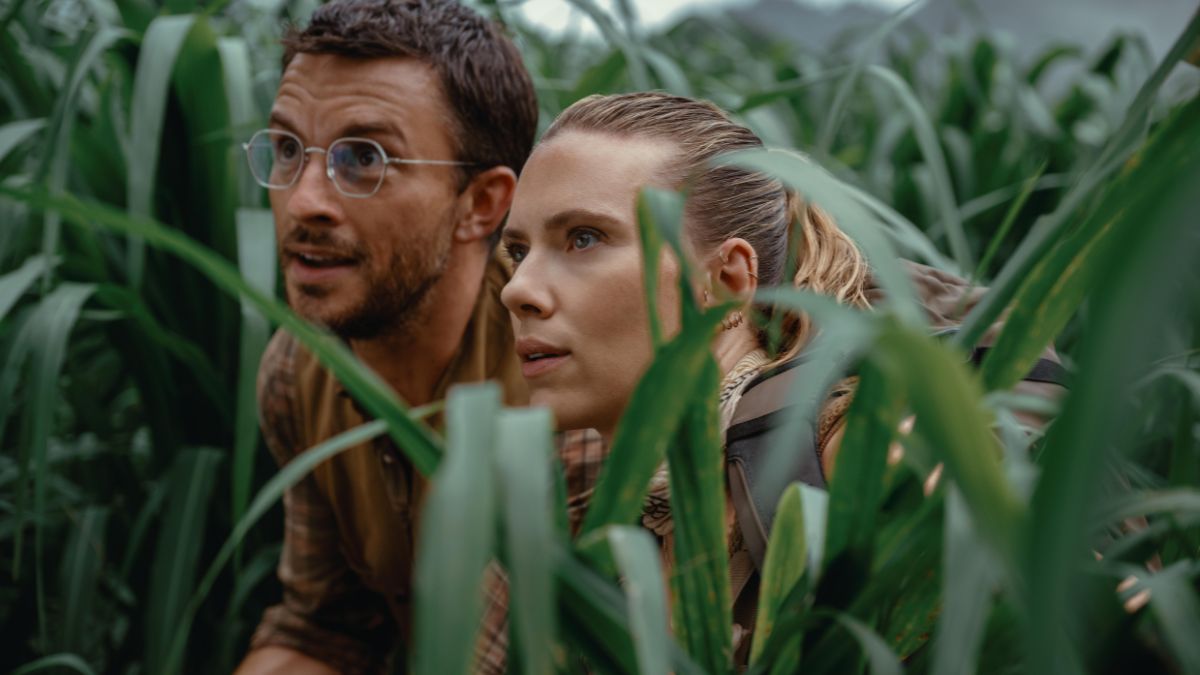
Naturally, they won’t be left in peace. It transpires that they contain a chemical element in their blood which might combat heart disease. Rupert Friend plays an agent of some multi-national drug company seeking to make billions from this potential medical byproduct. Unsurprisingly, this company has millions to throw at the right people (including Scarlett Johansson) for a surreptitious medical safari to the relevant island.

‘Jurassic World: Rebirth’ directed by Gareth Edwards
At the same time a group of four – a Dad, his two daughters and the elder daughter’s boy friend – are sailing along on a leisurely ‘get-too-know-you’ cruise. Suddenly one of those prehistoric creatures overturns their little yacht and they unintentionally end up on the same deserted island as the medical research safari.
From then on the suspense and predictable encounters with the native wildlife ensue. While all this is going on, some of the humans begin to have doubts about their quest: on the one hand, there is the representative of the multi-national company that seeks to make billions; on the other hand, the lesser mortals who speculate that it should be available to all. (Shades of our own PBS).
However, before they can resolve the issue they have to get three blood samples from three different species and then escape from the island. Naturally, this is not going to be easy with their boats destroyed and a few hungry carnivores lurking about.
As in previous sequels, the marvels of science fiction resurrect and preserve these creatures while people of dubious intent want to make mega bucks out of them. Of course nothing ever goes according to the corporate plan proving that whizz-bang science (fiction) and corporate greed are not a good mix.
Apart from this glaringly obvious scenario, there is a more subtle message: if even the dinosaurs are slowly dying off (again), we had better take more note of climate change!
As a sequel it is rather predictable but still entertaining. Shot in Thailand the scenery is visually impressive as are the special effects – the creatures seem as real and as menacing as ever.
The box office returns prove that these massive creatures are unlikely to become completely extinct as far as film sequels are concerned. Dinosaur fans, in particular, can await the next instalment.