


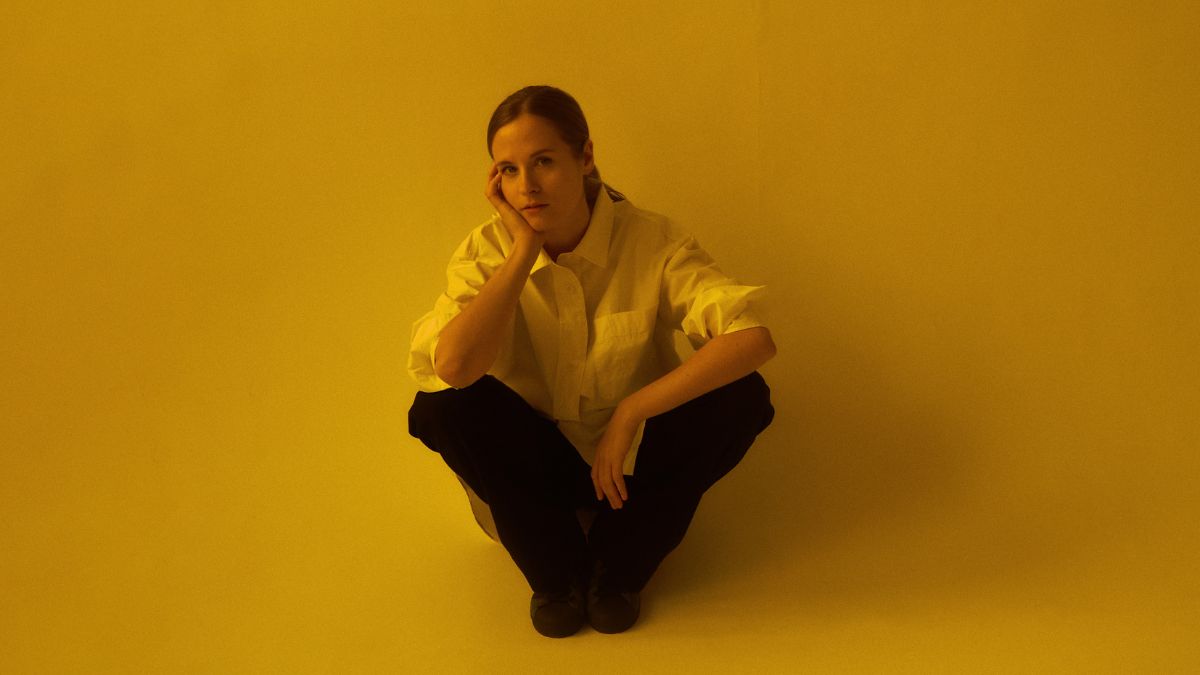
Polish musician/composer Hanai Rani sits, surrounded by a variety of keyboards and lighting fixtures, alone on stage. I came to the show with two albums of hers under my ears – “Esja” and “On Giacometti”, two incredibly sombre minimalist keyboard works which I recommend, though it definitely did not prepare me for this show.
Though advertised as a classical, minimalist gig (which was true, technically), Hanai Rani’s current iteration of her performance more accurately leant towards “solo post-rock music that plays into the tropes of minimalism”; she deservedly draws comparison to the likes of Kate Bush, Fiona Apple, and Ben Folds as much as she does to Philip Glass and Steve Reich. In my opinion, this is what minimalism has needed: for too long now has it been a musical bat-signal to the corporate mainstream, finding itself in film scores and broadband commercials, and it needed a good rocking. Though, as much as I try to escape it, her playing does bring about a score to some kind of imaginary film – an abstract documentary about the beginning and end of time, perhaps.
Strangely, the star of this music show for me was the lighting. The lights primarily stuck between a white and orange – most likely chosen to emphasise her black clothes and red hair, though it did remind me of the streetlights on a highway. The purpose and effect of the lights were fluid throughout the show – at one point the orange light glowed from underneath, giving a candlelight effect, and at another, two white lights shone down from the top right, as if a ray of sunlight was beaming through a church window. In turn with a careful fog machine and some abstract projections, the lighting was used to the best of its capabilities, creating a strong, dream-like visual language for the performance to anchor onto.
The centrepiece(s) of the performance, however, was the horseshoe of keyboards she surrounded herself in. The three main pillars of the setup was a grand piano (which sounded confident and full), an electric tine keyboard (which reverberated with a cool, crisp quality), and an upright piano with the front taken off and innards exposed and mic’d. My personal favourite was the upright; hearing the felt and wood mechanisms inside the piano dance and creak as each key pressed brings up a feeling of nostalgic warmth in the heart, and brought a level of intimacy which is strange to feel in front of a massive stage with 16 massive speakers pointed at you.
The music itself was impeccable – it was effective in its simplicity (as is all good minimalist performance). Rani is a fantastic singer and pianist who moves around the stage with a deftness in their approach. The way her music was organised to flow from one effortlessly into another (more so in the first half) gave the impression of a mythological, ethereal odyssey. Her endless time-keeping bobbing and dancing was engaging to watch – it emphasised a clear joy in the process. She was very careful and considerate of the sound quality each instrument presented, making micro-adjustments to microphones and low-pass filters throughout.
In all, I think Hanai Rani is an amazing, accomplished, and prolific (holy shit what a Spotify page) musician and performer, and any performance of hers is not one to miss. I do wish it was better marketed so I didn’t have to spend half an hour re-adjusting as all the people who were expecting to see Philip Glass left, but who am I to get in the way of a scam I’ve thought about pulling off once or twice. If you’re in the mood to get whisked away into a cloudy sky at sunset or into the dreams of electric sheep, check to se if Hanai Rani is in town.