


‘They tried to make me go to Rehab
But I said no, no, no…’
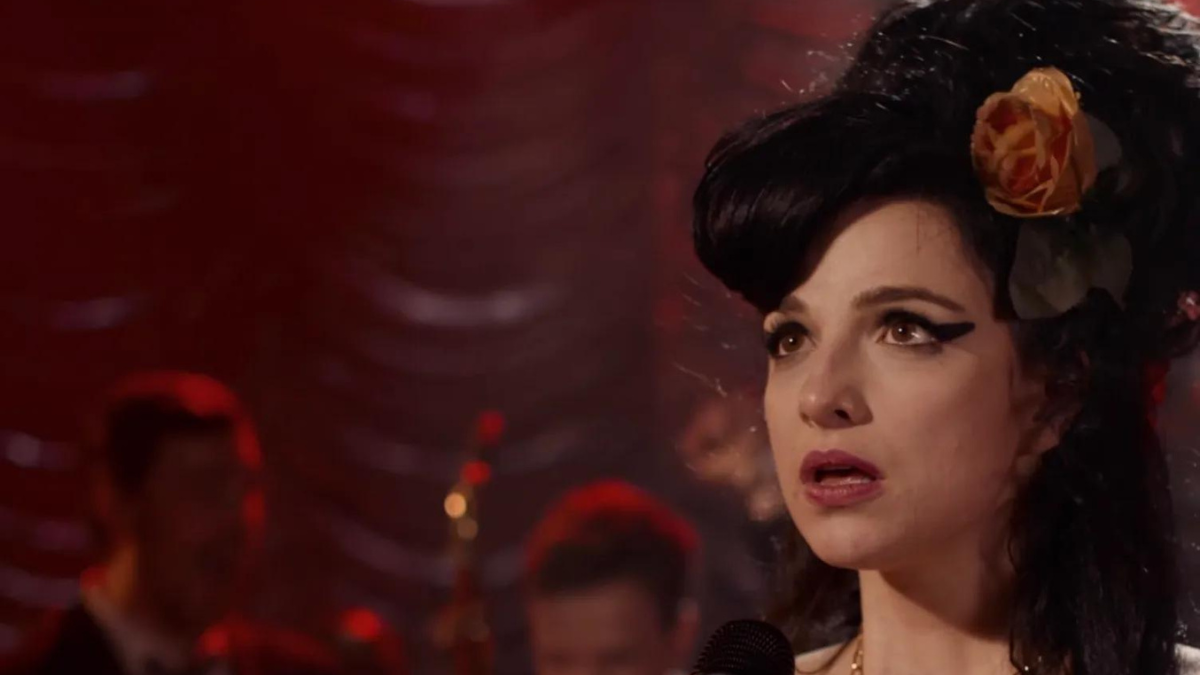
These are the opening lyrics of one of Amy Winehouse’s most famous hits. It encapsulates the public aspects of her life and fame, in particular her struggles with addiction. Her beehive hairdo, tattoos and prominent eye shadow were the trademarks of her district image which complemented her unique voice and singing style. As with any famous artist, there is always more to them than their public persona. This biopic takes us beyond the image to reveal the individual behind all the hype and publicity. The script is well written and the film well cast, particularly the lead actor. Marisa Abela is brilliant in the title role: she looks and sounds so much like the person she is portraying, we might easily forget that it isn’t the real Amy Winehouse on the screen.
Unfortunately, the history of popular music is filled with singers who met untimely deaths and Amy Winehouse is one of the more recent stars to suffer this fate. With her loss, we lament not only a life cut short but also the unrealised potential: how much more she still might have achieved. In Amy’s case, she had achieved so much already. She won many awards and accolades for her songs (including six Grammys – the first British singer to do so).
Like many famous singers who died young: Jimmy Hendrix, Janis Joplin, Jim Morrison, Kurt Cobain, she had her demons with alcohol chief among them. (It is a sad coincidence that all of these music icons, including Amy, died at the same age: 27). It would be easy to dismiss her as some hopeless drunk but, as this film shows, her life and her personality were much more complex. To begin with, her situation was not helped by the hangers-on who were out for what they could get from her. Even her husband is depicted as being manipulative when it comes to her fame and wealth.
As this movie makes abundantly clear, fame and success bring all sorts of demands. They have to be managed along with all the other more basic aspects of a life such as forming and maintaining long-term relationships including those with family members and trying to have some sort of private life away from the glare of publicity.

Back to Black. Directed by Sam Taylor-Johnson, 2024.
To get beyond the public image, this film depicts relatively little of the glitz and glamour of the show biz lifestyle. The glamour is tempered by all the demands of contracts and promoters; the glitz is tarnished by all the hangers-on who seek the maximum benefit from their investment. As a very young woman she is not used to dealing with the high finance aspect of the music industry, its contractual obligations, tight performance schedules and, above all, the control it asserts (or tries to) over the artist’s output. She is overwhelmed not only by the fame junket but also by the unfortunate personal tragedies including the loss of her beloved grandmother and a partner who cannot give her the commitment she seeks.
There are images of the luxury lifestyle but the story focuses on the working class origins of this cockney Jewish woman. There are many scenes in the houses, flats, shops, pubs and clubs of her native Camden suburb. We even get glimpses of her, at times, rather messy home with dirty dishes in the sink and objects over the living room floor. Gritty reality overrides all the hype that goes with wealth and fame.
She has some stability in her close relationships with her grandmother and her father who acts as her manger and adviser. Parallel to this devotion is her dedication to her art and her audience. The upheavals of her life are often the motivation for her song lyrics including ‘Back to Black’.
She is a famous and successful artist struggling to cope with the demands of her particular situation. Apart from a few close family members she has few supports. Unfortunately, her primary coping mechanism is alcohol, an addiction she could never quite overcome. It leads to many unpleasant consequences from blackouts to domestic disorder to spontaneous violence. (Towards the end of her life, it affected her physically – at times leading to an emaciated appearance – and cognitively when she became disoriented on stage – even being booed during a performance and walking off stage).
What is more tragic is that her death from alcohol poisoning came after a lengthy period of sobriety. The amount of alcohol in her system was astounding: way beyond that of a casual binge.
Because of her talent, fame and early death, she remains forever young, potentially on the brink of something more and this ensures her a degree of immortality in the annals of popular music. We already know her as a music icon but this film shows her as an individual with strengths and weaknesses – someone we get to know, admire and empathise with.