


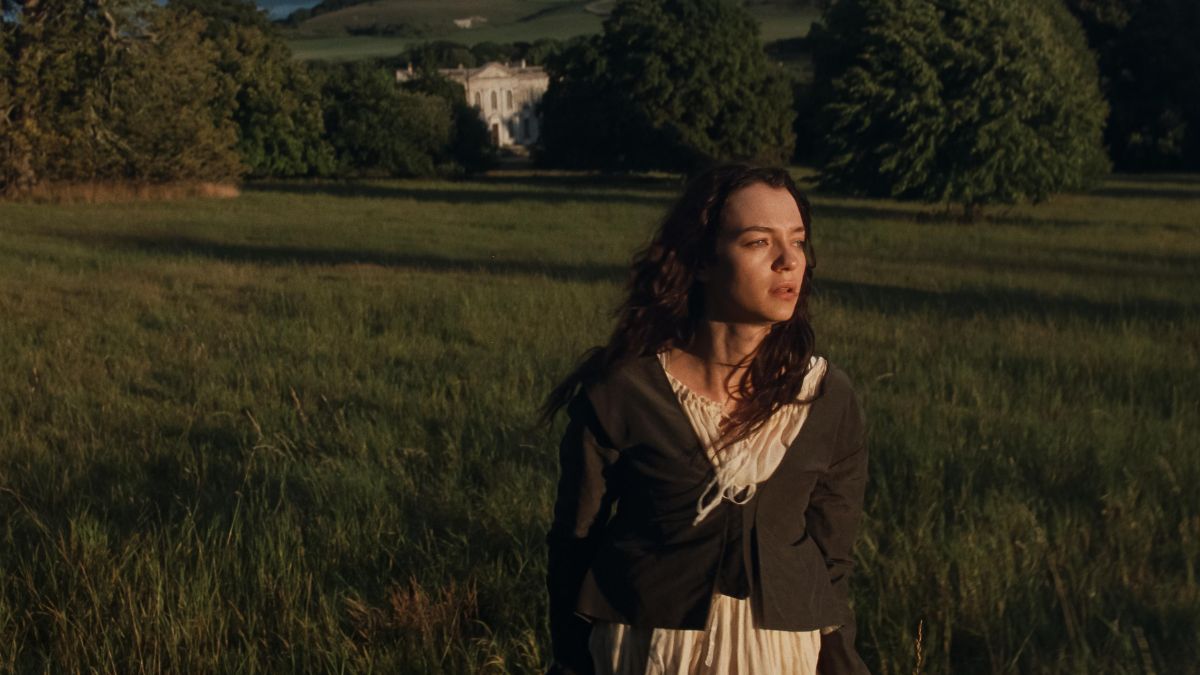
The works of Jane Austen have been around for more than two centuries and this lasting appeal stems from her ability to accurately depict and subtly critique the society of her time. Their continued popularity has seen many screen adaptations. Georgia Oakley’s ‘Sense and Sensibility’ is the latest film version of one of her more famous novels..
This film recreates early 19th century Britain – a world of fine manners, domestic servants and enormous public reticence between the sexes as well as strict boundaries between the social classes, specifically the ‘haves’ and the ‘have-nots’ with the latter expected to ‘know their place’.
The main characters are two sisters – Elinor and Marianne Dashwood – whose family faces restricted financial circumstances. They have a modicum of education and some money behind them but not enough to ensure long-term security or a permanent home. These financial issues are explored within the context of the limited choices available to them and women in general. (Excluded from the professions and denied access to tertiary education, women had few options other than legally sanctioned marriage).
While long-term financial security is a dominant theme, these heroines are not simple money-grabbers but intelligent and articulate women who are particular about who they will marry: money is not enough, there has to be love and compatibility and, above all, personal choice.
Clearly they are not shrinking violets but individuals who know what they want and aren’t afraid to question the social restrictions placed on them. Their world is one of class, etiquette, social boundaries and laws, which generally deny women any effective identity outside of conventional marriage. Overall the film explores the vagaries along the rocky road to true love and financial security. As such, this period piece is part sociological study and feminist critique.

Sense and Sensibility. Directed by Georgia Oakley, 2026.
This movie, like the original novel, unfolds on two levels: that of the individual characters and the broader social context. Their personal issues and conflicts all unfold within the societal norms and rigid mores of the period. Furthermore, there are enough twists and turns in the plot to maintain tension and audience interest until the end. It is not until the final scenes that we learn the ultimate resolution.
The latest version effectively transports the viewer into this long-ago period. The characters are well cast especially the leads Daisy Edgar-Jones and Esme Creed-Miles who are delightful as the Dashwood sisters. All the elements – acting, script, editing and cinematography – blend to recreate the world and characters of the distant past.
The authenticity is complemented by the impressive visuals ranging from scenic countryside to realistic interiors. A further touch of realism is the subtle radiance of the internal scenes. Generally we cannot avoid the impression that the rooms – whether those of rustic cottages or spacious ballrooms – are lit by candles and oil lamps since they all exhibit the softness of illumination before the age of electric lights.
This film is a window into a bygone era and breathes new life into a very old story. This latest Austen remake reminds us that the path to true love never ‘did run smooth’ – something even in the early 21st century we can still relate to.