


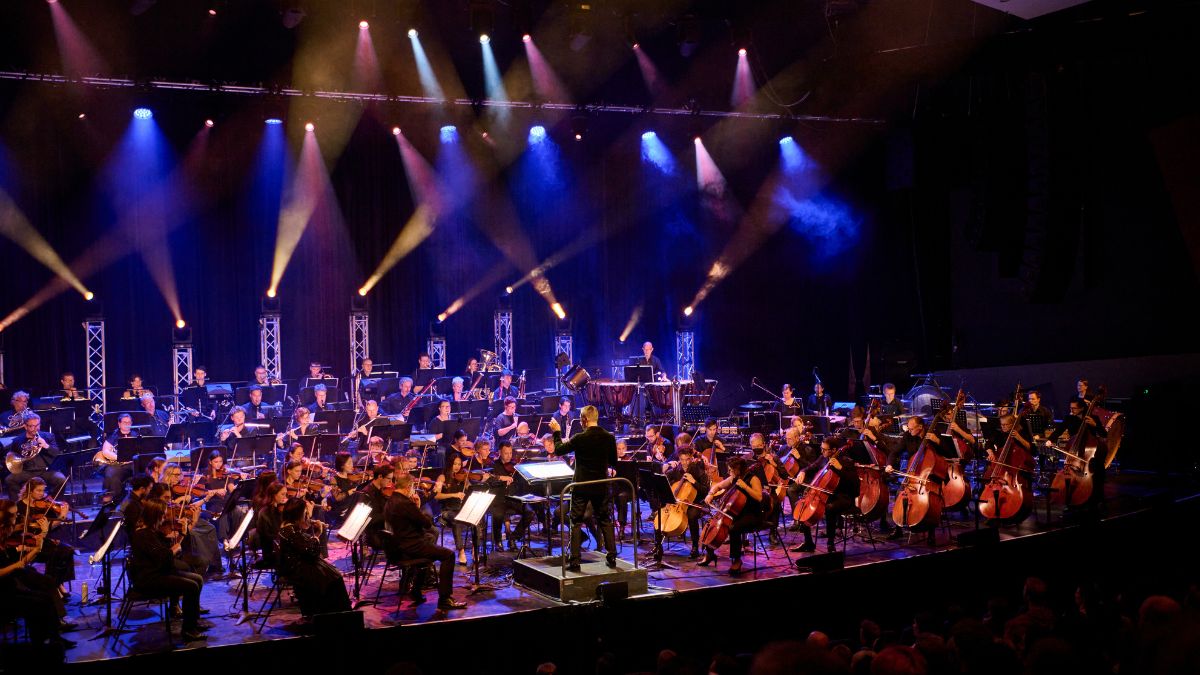
John Williams is a name who has shaped the way we have ‘heard’ movies over the last 50-odd years. You may not know his name, but you’d definitely know his iconic music – it’s part of the very fabric of popular culture. The Music of John Williams delivered a celebration of his work that was equal parts concert, film history class, and a love letter to the magic of film music.
Held at the Riverside Theatre, this collab between WASO and the Melbourne-based podcast Art of the Score presented something refreshing and different: a symphony orchestra concert that was not only musically marvellous, but also clever, funny, and entertaining.
The evening began with Planet Krypton, Superman March, and selections from Close Encounters and Indiana Jones. The music was sprinkled with insightful commentary from hosts Andrew Pogson and Dan Golding. The pair brought a light-hearted, almost bumbling charm to their presenting, peppering the program with jokes, film trivia, and accessible explanations of Williams’ themes and approach to composition and melody writing. It made for a fun atmosphere that demystified orchestral music for even the most casual moviegoer.
The conductor, Nicholas Buc, was the third host of the night. A brilliant conductor in his own right, Buc not only led the orchestra with infectious energy, but also orchestrated and arranged many of the excerpts performed. His creative rearrangements combined and intertwined familiar themes with surprising melodic fragments, keeping the audience constantly engaged. Hiding Darth Vader’s theme within the French Horn part in the Superman music was delightfully silly.

WASO’s The Music of John Williams concert. Photography by Rebecca Mansell.
A standout moment came with the Theme from Schindler’s List, performed heartbreakingly by concertmaster Laurence Jackson. His violin was plaintive and aching, drawing out the sorrow in every note—it was a moment of stillness that resonated deeply and brought many (including me) close to tears.
The journey continued with excerpts from Harry Potter, Jurassic Park, Star Wars, and E.T., each played with dynamics and emotion. As the music unfolded, it became clear why John Williams’ legacy is so great: he is the second-most nominated person in Academy Awards history, behind only Walt Disney. Across genres, his work has dominated the box office and our collective imaginations.
Williams truly is gifted at writing a good melody: his unforgettable, emotionally rich tunes, the way that he creates leitmotifs in his films, associating characters, emotions, and ideas with sound in a way that has come to define the modern blockbuster.
It’s not exaggerating to say John Williams may be one of the most extensive composers in history. Before you even stepped into the concert hall, you would have already heard his music many times – on screen, in theme parks, in your dreams of lightsabres, flying bicycles or roaring dinosaurs.
The Music of John Williams was a delightful celebration of that legacy. The show was musically superb, enthusiastically presented, and bursting with love for both film and symphonic tradition. It was a reminder of what orchestral music can be: immersive, inclusive, and downright magical. WASO and Art of the Score have struck gold with this format, and we can only hope this isn’t the last time these worlds collide.