


First published in 1847, ‘Wuthering Heights’ has seen many screen adaptations – both with feature films and television mini-series. Since it has seen so many incarnations, there are few spoilers for most of us – even for those who have never read the original novel.
While each version may vary a little from its predecessor, they all contain the same sharply drawn characters and the same basic theme: the mutual frustration of two people – Heathcliff and Cathy Earnshaw – intensely drawn to each other who can never be ‘officially’ together due to the rigid social barriers of the period. (Shades of ‘Romeo and Juliet’ but much darker and more complex than mere feuding families).
Set in the latter eighteenth century when the class system was firmly entrenched, women had few rights and wealth was much more unevenly distributed. To escape poverty, a woman had few options other than to marry a wealthy husband. Cathy Earnshaw is one such woman who chooses to escape poverty – specifically her drunken father who gambles everything away – at the expense of her true love.
For purists of the original novel, this latest version omits quite a bit. However, at over two hours long, this is probably a logistical necessity. Nevertheless, the editing ensures that it moves at a rather steady pace. It emphasises the intense and conflictual relationship between Heathcliff (Jacob Elordi) and Cathy Earnshaw (Margot Robbie). This emphasis means that other significant characters are not as finely realised. For example, Cathy’s husband Edgar Linton seems rather peripheral to the story.

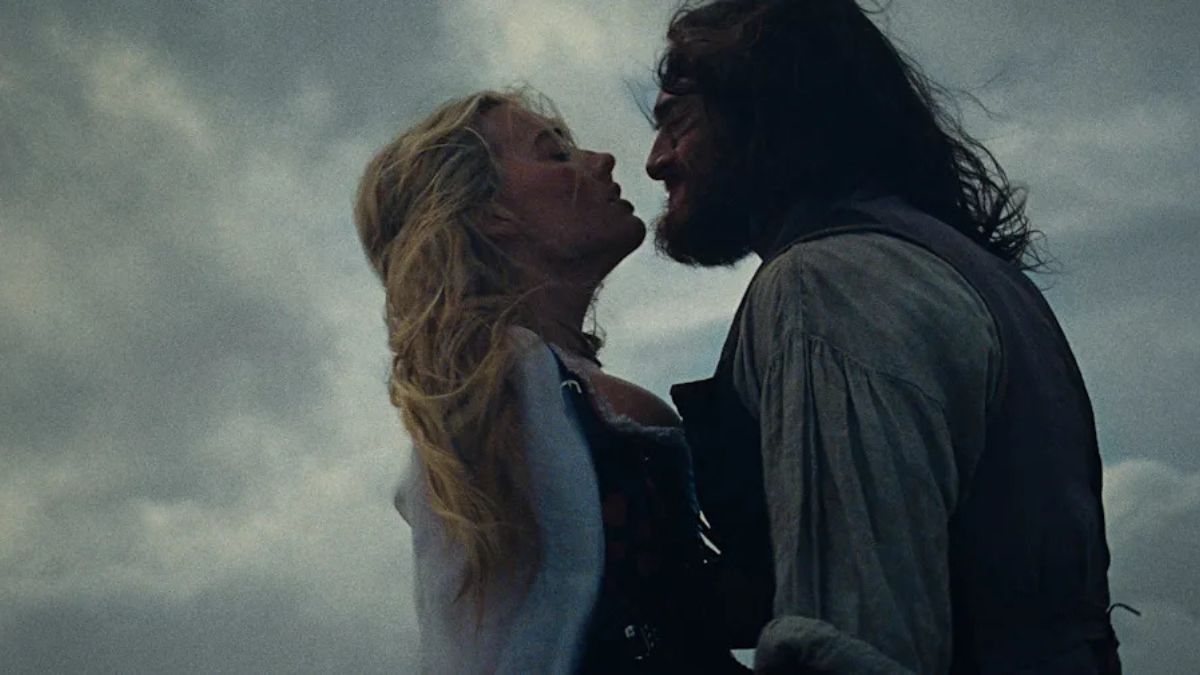
‘Wuthering Heights’ directed by Emerald Fennell, 2026.
Overall, this film definitely excludes the atmosphere of that era: misty, windy Yorkshire Moors, period costumes and interiors that vary from the shabby to the extremely opulent. The lead actors give very credible characterisations. Margot Robbie’s Cathy alternates between a shrieking violet and a desperate, even devious women. Jacob Elordi is excellent as the intensive Heathcliff who transforms from a scruffy, brusque labourer into the successful country squire, wealthy enough to purchase Wuthering Heights – Cathy’s former home.
His metamorphosis from humble servant to wealthy citizen contrasts sharply with the change in his character where all his negative traits are exacerbated. While he loses his scruffy unkempt appearance, inwardly he becomes more devious, bitter and even cruel. His quest for revenge becomes obsessive and his cruelty, at times, becomes sadistic.
Apart from the leads, other notable performances are the two child actors who play the younger Cathy (Charlotte Mellington) and Heathcliff (Owen Cooper). Above all, Martin Clunes shines as Cathy’s dissolute and drunken father – nothing like his most famous role as the pedantic, strait-laced ’Doc Martin’!
While some critics have panned this version, the box office returns indicate that it is very popular with the viewing public, having already grossed more than double its original budget. Clearly, frustrated passions and forbidden liaisons resonate with many among the general public.
If you are into period dramas about thwarted ‘true love’, see it and judge for yourself.