


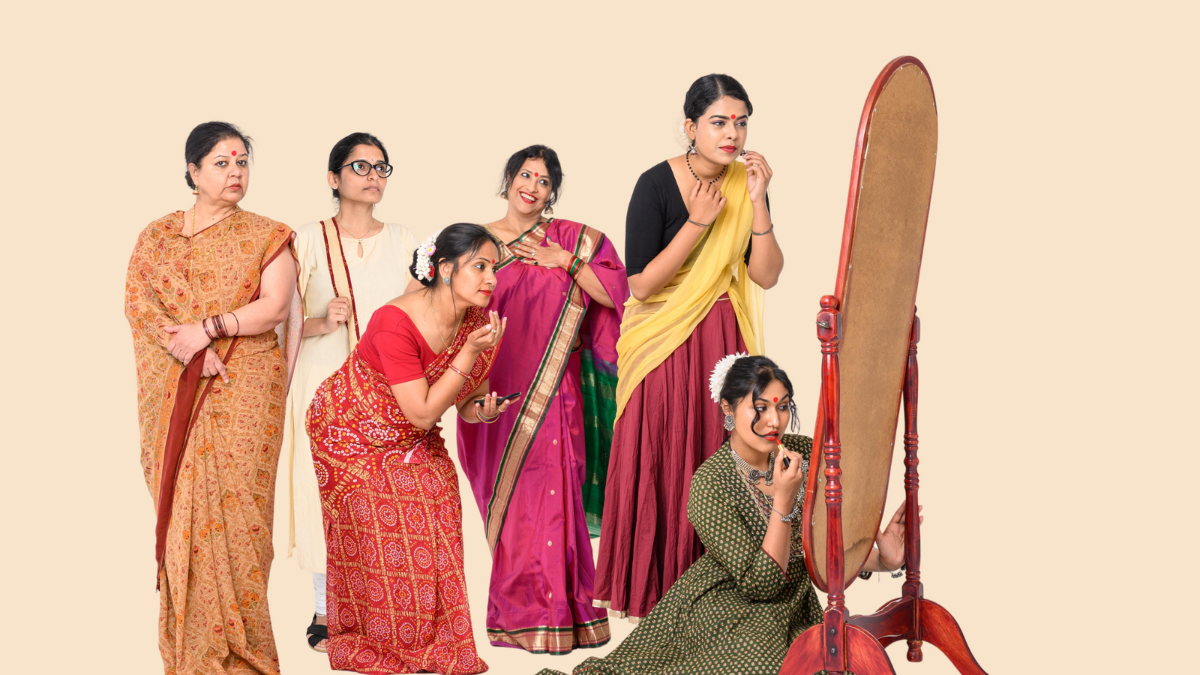
For thousands of women in India’s most marginalised communities, sex work is a means of survival—a complex reality shaped by trafficking, poverty, and economic hardship. Indian-Australian actor, playwright, and director Sreekanth Gopalakrishnan felt compelled to bring this topic to the stage after viewing DW Documentary’s India’s Prostitution Villages. In Crimson Gully, set in a fictional red-light district in India, Sreekanth directs a cast of 16 in exploring the dreams and solace these women seek amidst the harsh realities of sex work. We spoke with Sreekanth about the themes of the show, his approach to creating an authentic and respectful space for these stories, and bringing together top talent from Perth’s Indian community.
The show explores complex issues, including misogyny, class divide, and the sex industry. How did these themes come together for you, and what motivated you to bring them to the stage?
Themes like misogyny, class divide, and the challenges faced by women in the sex industry are often harsh realities that exist just beneath society’s surface. Through Crimson Gully, I wanted to create a space where these issues aren’t just acknowledged but deeply explored. These are universal stories of struggle, resilience, and the human spirit, with nuances that resonate across cultures. I felt compelled to bring this to the stage because theatre has a unique ability to confront these social complexities in a way that is both raw and empathetic. It’s a piece designed not only to entertain but also to provoke thought, inspire empathy, and perhaps even invite introspection in audiences.

Sreekanth Gopalakrishnan.
The play delves into the personal lives of women trapped in the sex industry. What was your process in developing these characters?
Developing the characters in Crimson Gully was a profound and layered journey. These women, who find themselves entangled in the confines of the sex industry, each have unique backgrounds, hopes, and personalities that bring depth to their shared experience of struggle and survival.
To authentically portray these lives, I wanted to approach each character as an individual whose story deserved empathy and authenticity. The process began with deep research to understand the social, cultural, and economic factors that often entrap women in these circumstances. I drew insights from survivor testimonies, renowned journalists’ books, and documentaries, each offering perspectives on both the visible and hidden aspects of their lives.
Once I had a grounding in their world, I worked closely with the cast to flesh out each character’s internal and external conflicts, infusing their individual backstories with experiences, dreams, and fears that resonate universally.
Have you encountered any challenges working with these topics that explore societal taboos?
Topics like the sex industry can be difficult to confront, as they challenge not only societal norms but also personal beliefs. One of the initial hurdles was ensuring that the material was treated with the respect and sensitivity it deserves.
Audience perception was another consideration. Addressing taboos often prompts strong reactions, and we wanted to invite dialogue rather than defensiveness. This meant carefully crafting scenes to resonate emotionally without overwhelming or alienating the audience. For instance, we decided to incorporate certain moments of vulnerability and humanity in each character’s journey, encouraging viewers to see beyond societal labels and to connect with the person beneath.
Working with the cast presented unique challenges as well, as these are heavy themes for any actor to embody. We made space in our rehearsals starting from auditions to discuss the psychological impacts of these roles and to ensure everyone felt supported throughout the creative process. This deepened both the actors’ understanding of their characters and their commitment to telling these stories authentically.
The play has a content warning and is not recommended for anyone below 16 years of age due to the strong themes, languages, sexual references, and stylised violence.

Being the writer, director, and producer, you’ve got a lot on your plate! How are you finding the balance between these roles and the demands of each?
Balancing the roles of writer, director, and producer is a bit like juggling, with each role tossing in its own unique “surprise” now and then! Some days I’m completely immersed in the creative side, shaping characters and scenes, and other days I’m worried about the budget, reminding myself why I thought it was a good idea to handle all of this.
It’s a lot, especially with a young family and a day job, but honestly, the variety keeps things exciting. And if anything goes sideways, at least I only have myself to answer to—so that’s a plus! 🙂
With a large cast of 16, what’s it like directing so many people on stage? You’re also incorporating acting, dance, and music—how do you blend these elements together?
Directing a cast of 16 is a thrilling adventure! It’s like conducting an orchestra where each “instrument” has its unique voice, rhythm, and presence on stage. Coordinating the acting, dance, and music elements brings everything to life in layers, especially as some scenes draw on the cultural richness of historical “Kothas”—brothels from the Mughal era where “Mujra” dance was integral. To capture the essence and cultural flavour, we’ve incorporated these aspects thoughtfully, even though they’ve evolved from their original form.
The challenge is finding the right balance, allowing each performer to shine individually while keeping the overall harmony of the play. When it all comes together, the combined effect is truly immersive.

Can you tell us about The Great Indian Theatre Company and why you founded it? How has the company evolved since 2022?
The Great Indian Theatre Company was founded with the vision of telling stories that reflect the multifaceted experiences of culturally and linguistically diverse communities, especially within the Indian diaspora. Since its inception in 2022, it has been about more than just bringing a story to life on stage; it’s about giving underrepresented voices a platform and bridging cultures through theatre.
Our first major production, The Final Line, in 2023, was a landmark moment for us. Not only did it win the prestigious Yvonne Hough-Neilson Award at the 48th Robert Finley Awards, but it was also recognised as one of the Top 10 plays of 2023 by the Independent Theatre Association.
In terms of growth, the company has come a long way where each production has added new dimensions, from experimenting with genres to introducing complex themes, and, most importantly, reaching a wider audience each time.
Crimson Gully runs from 15 to 17 November at the Nexus Theatre, Murdoch.