


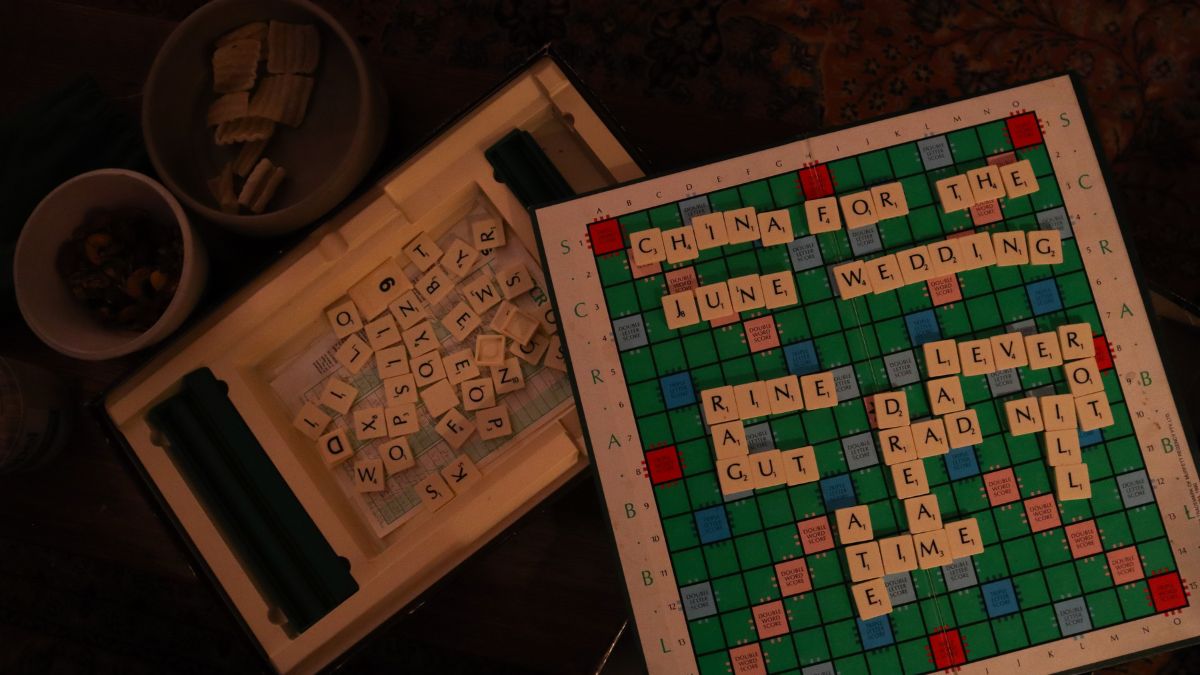
Last year, Howard McKenzie-Murray was a finalist in Western Australia’s most prestigious award for an unpublished work of fiction. This year, he’s flipping the script and making his debut as a playwright with China for the June Wedding.
Billed as a contemporary comedy-drama, the show follows three housemates living on a street called Rue De Martyr, each running from something different.
This show is described as possibly the “most drunken and certainly the classiest not-quite-love story in Perth this year”. We caught up with Howard ahead of the show’s opening to chat all about it.
Hi Howard, thanks for chatting with Magazine 6000. To kick things off, can you tell us about the origins of China for the June Wedding? How did the idea evolve?
Well China was a short story that I couldn’t make work but I also couldn’t let die. I loved the characters, but I’m not sure I had anything very profound to say when I originally wrote it. When I came back to it five years later I realised that it should be transformed for the stage. They were the kinds of characters I was dying to see performed: they are so outward and poetic and they seem to process everything externally. And I loved what they could say about life. When I began turning it into a dramatic work it opened up. Maybe I found the right form for the work or maybe I had found something to say.
We’ve got three housemates as our characters — all with different running styles. What can you share about this bunch?
I’m going to politely keep the mouth zipped on this one – mostly because I don’t trust myself to not give spoilers away. All I’ll say for now is that hope, illusion, memory and avoidance are recurring themes for all the characters.

Photography by Dakota Hartig.
Now, we have the three housemates, but there’s also a narrator. How do they fit into the story? What drew you to the idea of including a narrator?
The play is what Tennessee Williams called a ‘ghost play’. For him that meant a show where the audience is informed that they’re watching events that have already happened. In China for the June Wedding the narrator, Max Gladstone, is also a character in the play who moves between the past and present like a tour guide to help orient the audience. A narrator just appeals to me. There’s a kind of intimacy you can have with the audience. To have someone in the play be able to reflect on the events as they’re being played out has fun and poignant possibilities that we really try to take to the limits in this show.
You’ve got Adam Sollis on board as the show’s director and producer. How did you and Adam come together on this production?
Yes, this mounting of China is a partnership with Adam Sollis and wouldn’t have been possible without him. I’m new to the world of performing arts whereas Adam’s a seasoned actor across TV, theatre and film. We know each other personally so when I was considering applying for The Blue Room Theatre’s 2025 season I reached out to him with the script. Adam’s worked as Assistant Director on past theatre projects but this is his first time in the Director’s chair so we took the whole project as an opportunity to stretch ourselves as much as possible. The writer-director relationship is one of trust – but, for me, that’s been a piece of cake. He has a sensitivity to relationships, subtle mood changes and character, and a knowledge of theatre that let me hand the baby over and sleep in peace.

Howard McKenzie-Murrary.
Have you had any peeks into the rehearsal room? What’s it like seeing your words come to life on stage?
I’ve definitely snuck into the rehearsal room once or twice. And it’s such a nice experience. To hear lines you wrote in a room come to life just as you heard them and actually land – it’s beyond nice. It’s also great when the script’s taken in a direction you didn’t see. When a moment is choreographed in a way you didn’t envision. You feel like you’re part of a genuinely collaborative team sharing a vision.
You write both fiction and theatre. How different do you find writing for each medium?
One main difference is that, for the most part, fiction writing isn’t hugely collaborative. You may work with editors towards the end of a story or novel, but my experience has been that the story is basically in place by that stage. Plus your relationship is conducted mostly via email. Theatre is hands-on collaboration with so many people who all have different technical skills and are bringing different visions to the table to decide how the show will sound, look and feel. So it’s more dynamic and more exciting.
Anything else we should know about the show? Should we get our passports ready?
Exactly, it’s time to dust off the old passport and pull out the beret from the bottom of the drawer. We’re going to Paris: the church bells of Sacre Ceour, the neons of Pigalle, children’s choirs, night markets, martinis and a dusting of snow. I’m very excited to show off what the cast and crew have accomplished. It’s a very special show and I’m looking forward to seeing everyone at The Blue Room Theatre.
China For The June Wedding is presented by ITSAHA Production and is on at The Blue Room Theatre from 29 April – 3 May.