


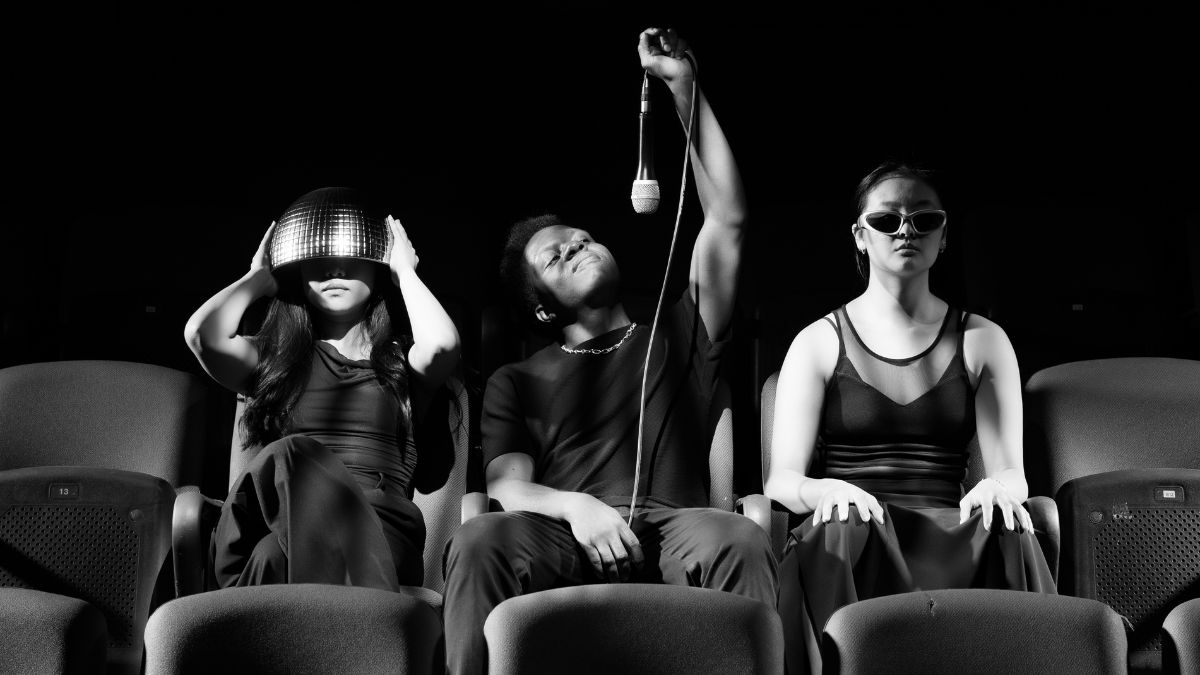
Long before short form content became the norm, The Blue Room was doing it first with their yearly staple season of 600 SECONDS. For those unfamiliar with the program, a group of artists are given just 600 seconds, 10-minutes, to present a short work. It’s a fascinating challenge that pushes us to consider what makes for great storytelling, especially under a tight time limit. This year the 600 SECONDS: MAKES program is under the mentorship of award-winning producer and performer, Bonnie Davis. Between sessions with the artists Bonnie responded to some questions from Magazine 6000.
Hi Bonnie, thanks for chatting with Magazine 6000. You’re mentoring 600 SECONDS: MAKES, how did you get involved with the program this year?
It was one of those lovely moments where I was invited to be a mentor, and I said yes immediately. I’ve always been a huge fan of the work The Blue Room do.
Many people would be familiar with your vibrant alter ego Famous Sharron. How do you approach your work and mentoring, combining the powers and knowledge of both Bonnie and Shaz?
Well Shaz and I have worked “together” for over a decade now, so I’m pretty used to her taking the limelight while I stay behind the scenes pulling everything together. Recently I’ve started doing more work outside of the “Famous Sharron” universe which is really refreshing – and as a bonus has made her universe stronger too.
I always seek out coaches for myself, and love mentoring other people too.
Sharing insights with others, reminds me of lessons I’ve learnt over the years, while also giving me an opportunity to reflect on how much I still have to grow. I don’t think the work ever stops when making and exploring art, and I’ve certainly learnt to enjoy the ride – the ups and the downs – and be grateful for the experiences I get to have.
Famous Sharron has taken me to some amazing places, and some of the tools that I’ve learnt took years to figure out and had huge impact – so if I can save someone a few years of searching by sharing an approach it’s a rewarding moment for everyone.

I am Grease Grillson. 600 Seconds – MAKES
The performers in the program have just 600 SECONDS (10-minutes) to perform their works. What are some of the key elements that make for a successful short work?
I’m a big fan of following the ‘character’ or the ‘truth’ of a scene, often we feel like we need to ‘create drama’ or ‘create funny’ to make a scene or a moment impactful, but in reality drama and funny will naturally happen if you push a character to chase what they REALLY want or the truth they’ve been avoiding. As the saying goes ‘truth is stranger than fiction’, we can believe bizarre things on stage and in real life – as long as we don’t ‘break’ the character.
Just like our characters, we all avoid parts of ourselves, and it’s the simple stuff that comes up again and again. Simple truths can have the most punch, so a lot of work I do on a scene or character is stripping it back to “would they really do that?” or “what do they really want?”.
When you find the genuine beats of the character or tension in a story, it can unfold powerfully for the audience, without it being shoved down their throats.
It’s the foundation for a lot of work I do, because characters are often ‘broken’ to create a scene or move a story forward, and once you can spot the pattern, it’s impossible to unsee. Audiences will notice the pattern if a character breaks too, but they won’t always know why something feels off, it’ll just feel like bad lighting at a party and they enjoy it less.
Audiences are smart, they like putting the pieces together, and it’s especially fun as an artist, to put it together with them on stage. I think it’s one of the things that makes live performance so special too.
Steve Kaplan writes really well about this if you want to learn more.
What are some of the challenges with creating pieces which have such a tight runtime?
All the artists in 600 seconds MAKES have a bigger show idea they are working towards, so it’s tempting to want to fit ALL the ideas in. Having a tight runtime is a great exercise in deciding what’s actually important, and what the audience really needs to see.
I really encourage participants to DRAFT DRAFT DRAFT – as we don’t always know what’s important until we’re running it, reading it, moving through it on stage. It’s easy to fall into the trap of trying to get it perfect on the first go – and you can waste a lot of time editing as you create. I prefer to create, then edit. And repeat.
If you’re going to create a new cake recipe, but you only get one go, you’ll fuss over it, not wanting to ruin it… But if you make twenty good cakes and you’ll learn what works and what doesn’t quickly and become brilliant at the different stages of cakes – maybe even discover new ways of creating.
Editing is a very hard process, but drafting seems to trip people up even more often. A first draft is probably terrible. Letting it be terrible is a challenge.
In standup-comedy I learnt this early – as you don’t have choice, most jokes are bad, and part of the process is sharing the bad ideas on stage to find the gold and the beats that are best. Then later the job is pretending that it came to you easily, when you deliver it on stage.
Failing sucks. Yes, everyone says it’s important, but it still hurts, so naturally we avoid it. Sometimes without realising.
So DRAFT DRAFT DRAFT is something I find myself talking through a lot with people.
Stop telling me the idea you have.
Write the idea. DRAFT DRAFT DRAFT
Show me the idea on stage DRAFT DRAFT DRAFT.
Don’t think about the cake so much, bake twenty of them and then tell me what you’ve learnt. DRAFT DRAFT DRAFT

Hissterier. 600 Seconds – MAKES
With your knowledge and experience within the Perth performing arts scene, why do you think programs like this for independent artists are so important?
This is an incredible opportunity for artists to experiment in front of an audience. 600 seconds is long enough to get really valuable insights and feedback, but not so long that it’s torture for everyone if part of it’s not working.
Audiences hate it when a piece doesn’t work, it’s awkward for everyone – including the performers.
But if you’ve agreed before you start, that we’re all taking a risk together – it’s incredibly rewarding when it works, and not as painful when it fails.
The audience are smart enough to see someone trying and appreciate that, while their very real reactions – even if mixed – are gold to a live performer to see what’s hitting, and what’s missing.
It’s really pretty special, and I think there is definitely room for more of these kind of programs in WA they’re incredibly valuable.
Tell us a bit about some of the works, what should audiences expect?
The works are all completely different, a real range of styles and content. There’s boy band choreography, reflective poetry, hilarious improvising, biting dialogue and surreal commentary. I’ve absolutely loved seeing the ideas unfold and I’m so curious to see where they land on the night.
What have you most enjoyed about mentoring this group of artists?
They all have such a unique vision and idea for their piece, and during development have really tackled the process head on. We only had limited hours, but I’ve been so impressed at how they’ve taken feedback on board and really pushed themselves to try new things, edit or rework ideas – even if it was hard for them to grapple with initially.
It’s a great reminder of what we are capable of when we push ourselves.
What are three words to describe 600 SECONDS: MAKES?
Get your tickets.
600 SECONDS: MAKES is on at the Blue Room Theatre from August 5-9 and its sister program 600 SECONDS: MOVES is on at the Blue Room Theatre from August 12-16.